Government publishes new details on rent convergence, Decent Homes Standard, Minimum Energy Efficiency Standards – read our member briefing

This week the government announced a series of major housing policy announcements, ending significant uncertainty around future regulatory requirements and rental income. These announcements include confirmation about how rent convergence will be implemented throughout the 2026 – 2036 rent policy period and the government’s response to major consultations on a new Decent Homes Standard and Minimum Energy Efficiency Standards.

Read our full member briefing here. 


Rent convergence

On rent convergence, the government confirmed that convergence would be implemented  through a phased approach, but would landlords would not be able to implement convergence from April 2026. Instead, convergence will be permitted for the financial year beginning from April 2027 at £1 per week, before rising to £2 per week from 2028 and for the rest of the ten year rent period.

Convergence will also only be permitted to formula rent level, rather than the additional 5% (or 10% for supported housing) that providers are able to charge in some circumstances.


Decent Homes Standard

The government also published their response to the previous consultation on a new Decent Homes Standard, with some major changes to the proposals after sector feedback.

Following consultation, the government are not progressing with previous proposals to mandate floor coverings as part of the Decent Homes Standard, or extending the purview of the Standard to include elements of the wider public realm beyond the home.

The below table shows a summary of the requirements for each Criterion within the new Decent Homes Standard, which will apply to all rented homes, in both the private and social rented sectors, from 2035.


Criterion Requirements
Criterion A – A home must be free of the most dangerous hazards •        Properties must be free of ‘Category 1’ hazards as assessed under the Housing Health and Safety Rating System (HHSRS).
Criterion B – A home must be in a reasonable state of repair Homes will fail this criterion if:

•        One or more key building components is not in a reasonable state of repair, or

•        • Two or more other building components are not in a reasonable state of repair.

Criterion C – A home must provide core facilities and services Flats must provide at least 3 of the following:

•        A kitchen with adequate space and layout

•        An appropriately located bathroom and WC

•        Adequate external noise insulation

•        Adequate size and layout of common entrance areas for blocks of flats


Houses must provide at least 2 of the following:

•        A kitchen with adequate space and layout

•        An appropriately located bathroom and WC

•        Adequate external noise insulation

All homes must also be equipped with:

• Child-resistant window restrictors (overrideable by an adult) on all windows that present a fall risk for children.

Criterion D – A home must provide thermal comfort •        Homes must provide a reasonable degree of thermal comfort, including meeting Minimum Energy Efficiency Standards.
Criterion E – A home should be free of damp and mould •        Homes will be non-decent if a landlord has not remedied damp and mould.


Minimum Energy Efficiency Standards

Finally, new Minimum Energy Efficiency Standards for the social rented sector, which will form a core part of Criterion E of the Decent Homes Standard, were also published.

The government had originally proposed that properties would need to align with two of three metrics, covering a building’s fabric, heating system and smart readiness, by 2030. This has been reduced in scope following consultation, so properties will now need to be compliant with one of the three metrics by 2030, and with two metrics by 2039. Providers will be able to apply for a “time-limited spend exemption” of ten years if they have incurred £10,000 of spend on an individual property’s energy efficiency upgrades and it still cannot be made compliant with the Standards.

There will also be an extended transition arrangement introduced, whereby all properties that achieve EPC C on the current system by 2030, will be considered compliant with MEES until their energy performance certificate needs renewing.

You can read the full details of the outcome of the MEES consultation here.

This comes on the back of the government publishing the Warm Homes Plan, laying out £15 billion worth of public investment to improve the energy efficiency of 5 million homes between now and 2030. You can read more about the Warm Homes Plan here.

NHC members will receive a full detailed briefing on all of these announcements in the coming days. Welcoming the announcements, the Northern Housing Consortium’s Chief Executive, Tracy Harrison, said:

“Today’s package of announcements will give Northern social housing providers long term financial and regulatory certainty and is warmly welcomed by the NHC. It will help our members to deliver warm and safe homes across the North.

“The Government has listened to and responded to feedback from NHC members on the new Decent Homes Standard and Minimum Energy Efficiency Standards. The new standards take on board consultation findings, and, as a result, are more practical to implement and will improve the quality of homes across the North. 

“The NHC and other sector bodies called for the introduction of rent convergence to unlock greater investment in new and existing homes. The rate the Government has put forward balances the need to invest in homes while ensuring rents remain affordable to residents. This, alongside today’s announcement that low interest loans will be available to northern housing associations, and the transformational £39bn ten-year Social and Affordable Homes Programme, will enable our members to build many more homes in the North.

“We look forward to continuing to work closely with the Government to support NHC members to deliver the homes Northern communities need.”


Check out our member briefing that brings together the key takeaways from these announcements, highlighting what they mean for housing providers and professionals across the North of England.

If you have any questions, or would like to discuss any of these policy changes in more depth, please contact ​Tom Kennedy, Senior Policy and Research Manager.

NHC Procurement announces Active Fire Framework

NHC Procurement is proud to introduce their new Active Fire framework – a fully compliant, cost‑effective route to market for fire safety products and services. Designed to help detect, stop, and prevent fire across every type of building, this framework brings together trusted, accredited suppliers offering:

  • Fire detection and alarm systems
  • Emergency lighting
  • Fire safety equipment
  • Consultancy and specialist services

Built with flexibility and innovation at its core, the Active Fire framework gives our members access to high-quality solutions that support safer homes and communities.

To mark the launch, NHC Procurement are hosting a member-only webinar to walk you through everything you need to know.

  • 25th February 2026
  • 10:00 – 10:30
  • Microsoft Teams

To book your place or request more information, contact brittany.shaw@nhcprocurement.org.uk

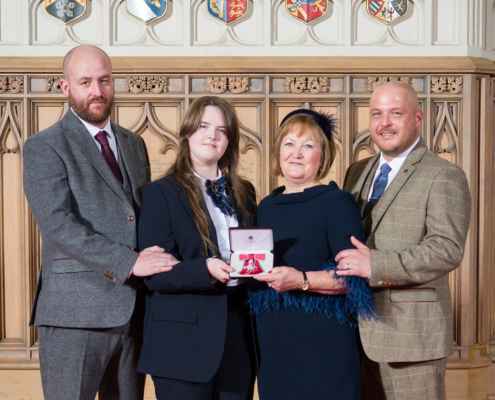
MBE for our longest serving colleague

Lynda Redshaw MBE

Northern Housing Consortium (NHC) Executive Assistant Lynda Redshaw was presented with an MBE for services to social housing in the North of England by her Royal Highness The Princess Royal at Windsor Castle.

Lynda, has worked at the NHC for 34 years, continuing beyond retirement age and demonstrating a courageous commitment to her role despite difficult personal circumstances. She has mentored colleagues throughout her career and has helped the NHC grow from a team of three to an organisation with over 40 staff. Lynda is a prolific fundraiser, generating over £60,000 for good causes while working at the NHC.

Lynda Redshaw MBE, Executive Assistant at the Northern Housing Consortium said:

“When I found out I’d been honoured in the Kings Birthday’s Honours List in June last year, I was completely shocked and surprised. Receiving my MBE at Windsor Castle was a very special day which will be a treasured memory for me and my family. It was an honour to meet the Princess Royal, and all the staff were fantastic, really putting me and the other honours recipients at ease.

“It is very gratifying to be honoured and recognised for the dedicated hard work I have done for the NHC over the last 34 years.  My family, friends and work colleagues are so proud of me, and to be honest I feel a little bit special and proud of myself too.”

Northern Housing Consortium Chief Executive Tracy Harrison said:

“I can’t think of anyone more deserving of this recognition than Lynda. Everyone at the NHC is over the moon for her. She is a well-loved colleague and someone who has made a tremendous contribution to the NHC and the social housing sector in the North. This was reflected in the number of supportive letters her honours nomination received. She is a fountain of knowledge and has for many years been the backbone of the NHC.”

Lynda was instrumental in setting up the NHC’s Unlocking Success Bursary which offers £500 grants to people living in social housing to help them access training or employment opportunities, or to start their own business. For fifteen years she organised the Hitex Summit, which connected social housing providers and IT suppliers, helping the sector in the North go digital. She is well known amongst NHC members for her impeccable organisational skills and helpful attitude.

Lynda attended the ceremony with her two sons and granddaughter.

Lynda’s first job was at Lumley Castle working in the office and taking banquet bookings. She went on to the English Industrial Estates Partnership as a secretary (now Homes England) followed by working at Chester Le Street District Council where she was a shorthand typist and secretary for the Chief Technical Officer. She then took a short career break to look after her young children and joined the Northern Housing Consortium in 1991.

RENEW Call for Evidence

As part of the Northern Housing Consortium’s inquiry into housing-led regeneration – RENEW – we are currently holding an open ‘Call for Evidence’ for stakeholders to contribute any information and insight into housing-led regeneration to inform our work.

This Call for Evidence is open until 27th February 2026 and we welcome contributions from representatives from housing providers, local authorities, combined authorities, developers, charities, think tanks, residents, academia and other stakeholders.

The Call for Evidence will help us:

  • Explore what we mean by housing-led regeneration, and how we capture the benefits of regeneration activity.
  • Establish the need for housing-led regeneration in the North and how best to communicate this need.
  • Understand what can be delivered within the Government’s current policy programme.
  • Identify levers, both national policy and as part of the devolution agenda, we believe will allow the North to go further.

We are especially interested in any insights and evidence that you can provide on the scale and quantity of areas identified in need of regeneration, including the number of identified sites and the number of homes within these areas. These issues are specifically investigated in questions 16 and 17 of the Call for Evidence questions.

The Call for Evidence is available here or you can send any relevant information or ask questions by emailing renew@northern-consortium.org.uk.

Government publishes the Warm Homes Plan

Last week, the Department for Energy Security and Net Zero published the Warm Homes Plan laying out the government’s plans to provide £15 billion worth of public investment into improving the energy efficiency of homes between now and 2030.

The Plan included numerous announcements that are relevant to the housing sector in the North, including:

  • £5 billion worth of funding targeted at low-income households, with £4.4 billion worth of capital grants. This covers both of the existing Warm Homes Social Housing Fund and the Local Grant schemes, with delivery of these schemes continuing as planned.
  • The Social Housing Fund has received a top up for the financial year 2026/27 taking the funding in that year to approximately £750 million. From 2027/28, both the Social Housing Fund and Local Grant will be combined into a single funding pot of £1 billion a year for low-income households, and will look to take a more area-based, cross-tenure approach.
  • A new Warm Homes Fund which will provide finance primarily to businesses and industry, looking to reduce the costs of technologies such as air-source heat pumps
  • £2 billion consumer loans to increase take up of measures such as solar PV, battery storage and heat pumps
  • A new Warm Homes Agency to oversee and coordinate the delivery of the Plan
  • Confirmation that the Future Homes Standard will be published in Q1 2026

The Plan also confirmed that more information on specific funding allocations for the social housing sector and the role of mayors and combined authorities in future retrofit programmes will be coming in March 2026. The government has previously promised full devolution of retrofit funding to all Established Mayoral Strategic Authorities within this parliament.

We also eagerly await a government response to consultations on Minimum Energy Efficiency Standards in the Social Rented Sector, and a revised Decent Homes Standard, both of which have significant implications for social landlords in the North and the delivery of the Warm Homes Plan.

In response to the publication of the Plan, Tracy Harrison, Chief Executive of the Northern Housing Consortium said:

We welcome the publication of the Warm Homes Plan and the government’s landmark investment in improving the energy efficiency of social homes. This will enable our members to continue the great work they’re doing to address the North’s older, colder homes. 62 per cent of social housing in the North now meets EPC C and our members are committed to continuing this journey.

“Our Warm Homes, Green Jobs research previously highlighted how investment in energy efficiency can create good, green jobs across the North and this programme is of the right scale to significantly contribute to this. We also called for Mayoral Combined Authorities to take the lead on delivering energy efficiency in their areas to meet the needs of local communities. We are pleased the government has pledged to put ‘local mayors in the driving seat’ and look forward to hearing further details about how this will work in March.

“To make this plan a reality our members need a detailed breakdown of funding allocations, and confirmation of related legislation such as Minimum Energy Efficiency Standards and the revised Decent Homes Standard so they can plan their programmes of work.”

You can read the full Warm Homes Plan here.

The NHC launches new Housing Partnerships Northern Conference: Driving Growth, Transforming Places

We’re launching a new annual Housing Partnerships Northern Conference; Driving Growth, Transforming Places, set to take place on 2nd July at the Marriott Hotel in Leeds. It will bring together housing partnerships from across the North, Mayoral Combined Authorities and other key stakeholders. The event will explore how the sector can transform communities and deliver lasting impact through increased collaboration.

Across the North, housing partnerships are emerging as one of devolution’s biggest success stories. By bringing together local authorities, housing providers, and other stakeholders, these partnerships are increasing collaboration with combined authorities and other sectors such as education and health.

The conference will:

  • Share learning and best practices across regions
  • Explore opportunities to strengthen our collective voice
  • Look at how housing partnerships can support devolution and regional priorities, including aligning with mayoral priorities

This event is for housing partnership members, combined authority colleagues, and other regional stakeholders. A programme will be announced in due course, but tickets are available through MyNHC now.

What are housing partnerships?
Housing partnerships bring together the social housing sector – including housing associations and local authorities – to work in partnership with mayoral combined authorities, Homes England and other stakeholders to deliver growth, better places, and new homes. They enable social housing providers to collaborate with other sectors, such as health and education, to meet local priorities.

Why does devolution matter for housing?
Devolution gives regions the power to shape their own priorities, allocate resources effectively, and respond to local needs. For housing, this means more than just building homes; it is about driving growth, transforming places, and unlocking the North’s full potential.